
Toyota Design System
Strengthening a design system used across multiple teams and products.
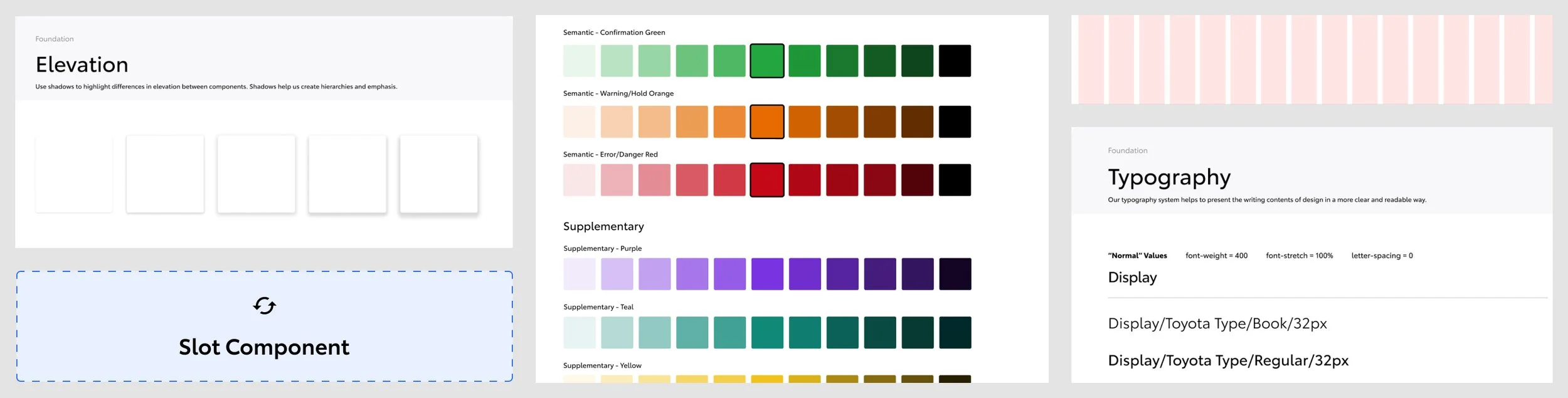
Toyota’s internal design system supports a wide ecosystem of enterprise products used by teams across the organization. My role focused on evolving the system through component creation, governance, and process improvements to help product teams move faster while maintaining consistency and accessibility at scale.
My Role
Design System Designer, Design Ops
Collaborators
Design Lead, Project Manager, Dev Team, Product Designers across org
Toyota’s internal design system had grown difficult to manage, resulting in:
Inconsistencies across products
A growing backlog of component requests
Gaps between designed and developed components
Reduced trust and usability for product designers
Product teams needed a system they could rely on that supported both immediate design needs and long-term scalability.
The Challenge
I partnered closely with product designers through an intake process to design new components, improve existing ones, and strengthen system governance. My responsibilities included:
Managing incoming component requests through an intake process
Designing new components and enhancing existing ones, ensuring they worked both for individual teams and the broader ecosystem
Identifying opportunities to mature system processes and governance
Improving consistency between design and development
My Role
System Audit & Foundations
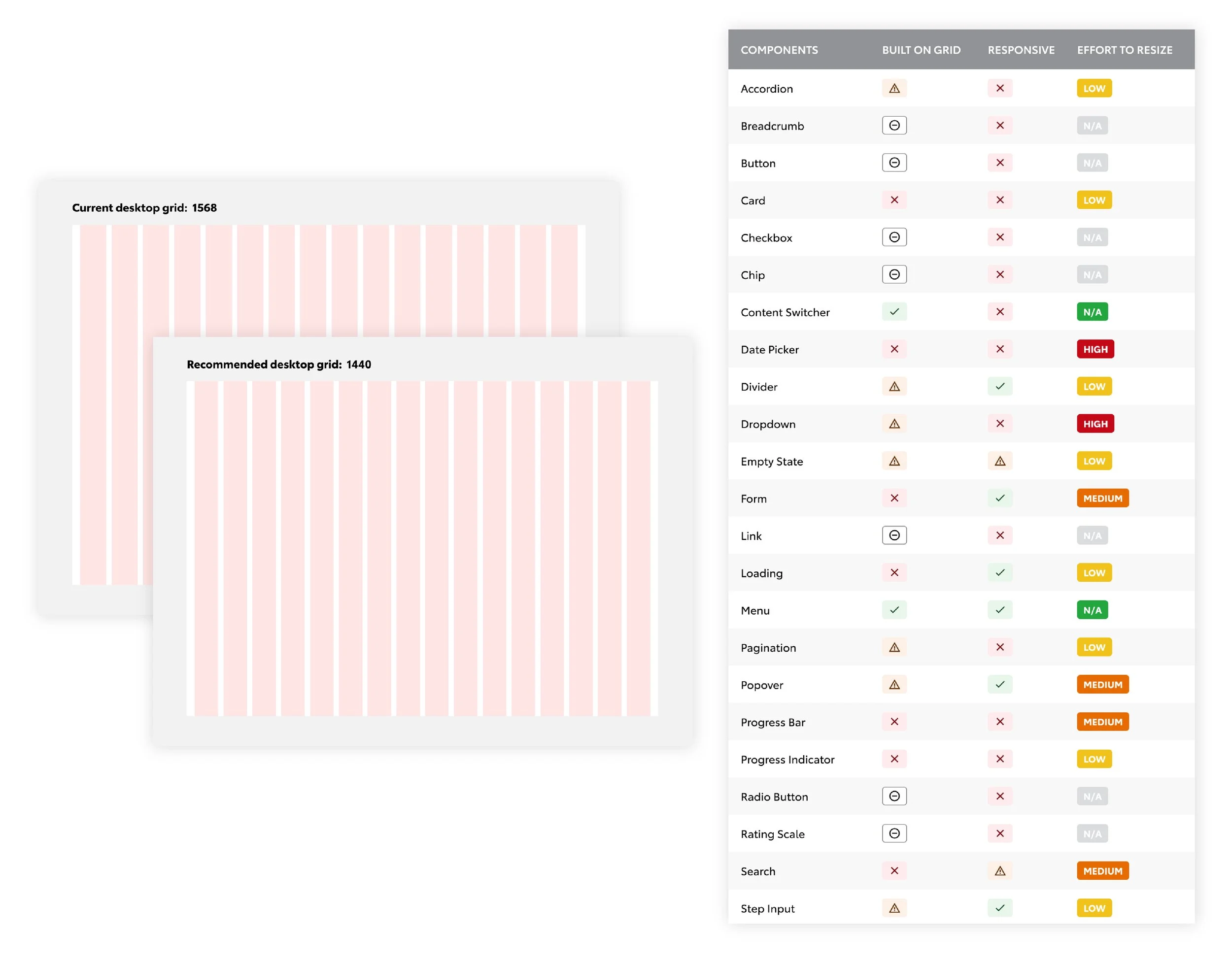
We began with a series of audits to understand where the system was breaking down.
I contributed to audits focused on:
Layout grid structure
Component accessibility
Responsiveness
These audits surfaced key gaps and inconsistencies, helping establish a clear roadmap for improving both the system’s foundations and day-to-day usability.
Component Design & Expansion
A large portion of my work involved designing and evolving components based on real product needs. Each component was designed to work for the requesting team while remaining scalable across the broader ecosystem.
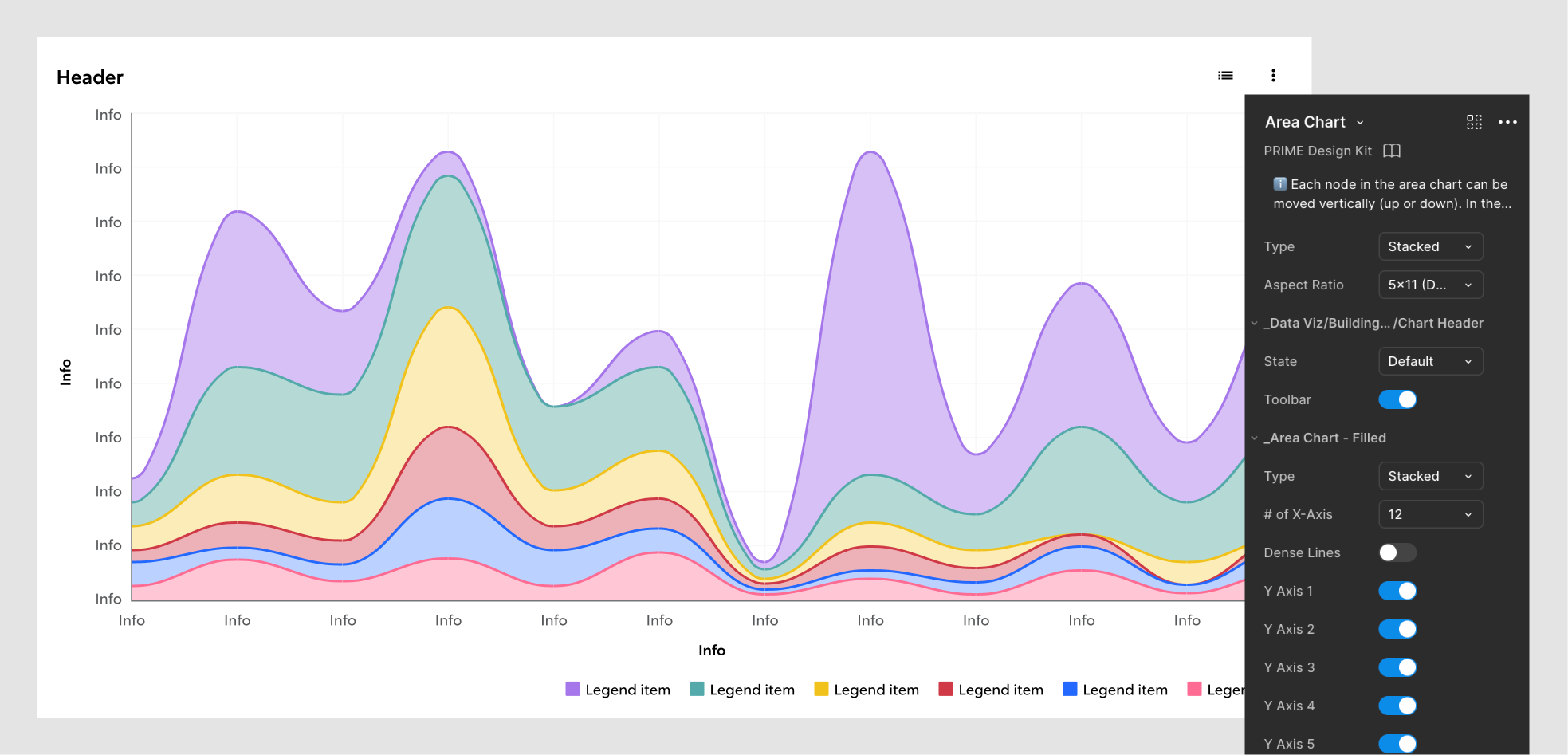
new standard component additions
5
customizable data visualizations
5
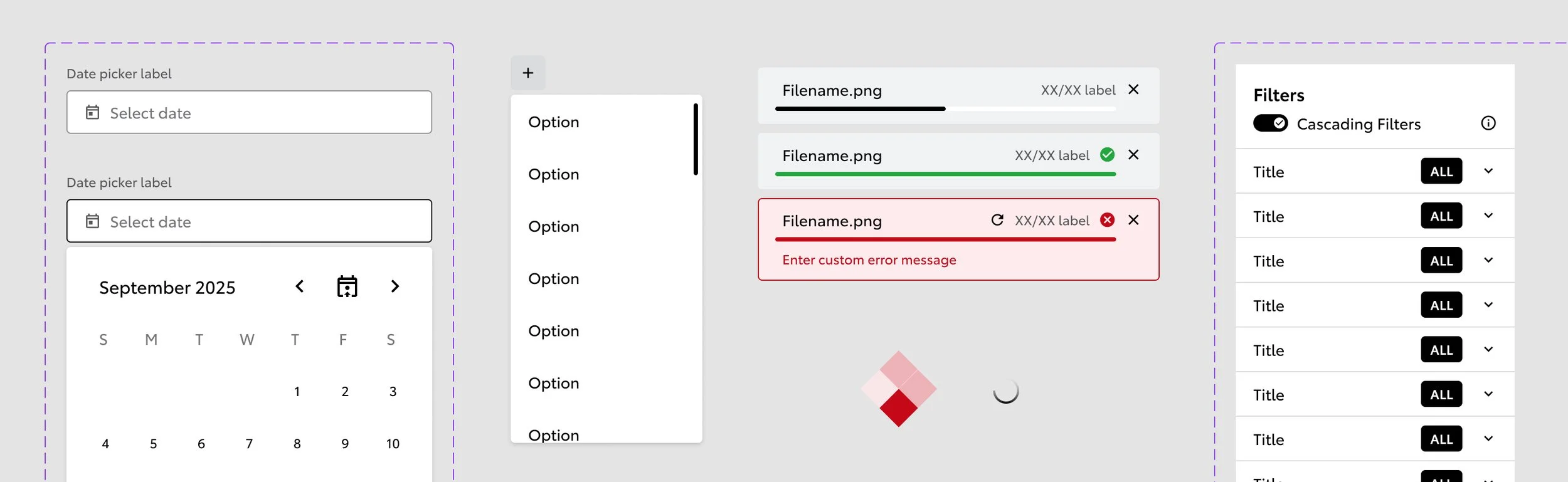
existing component updates
21
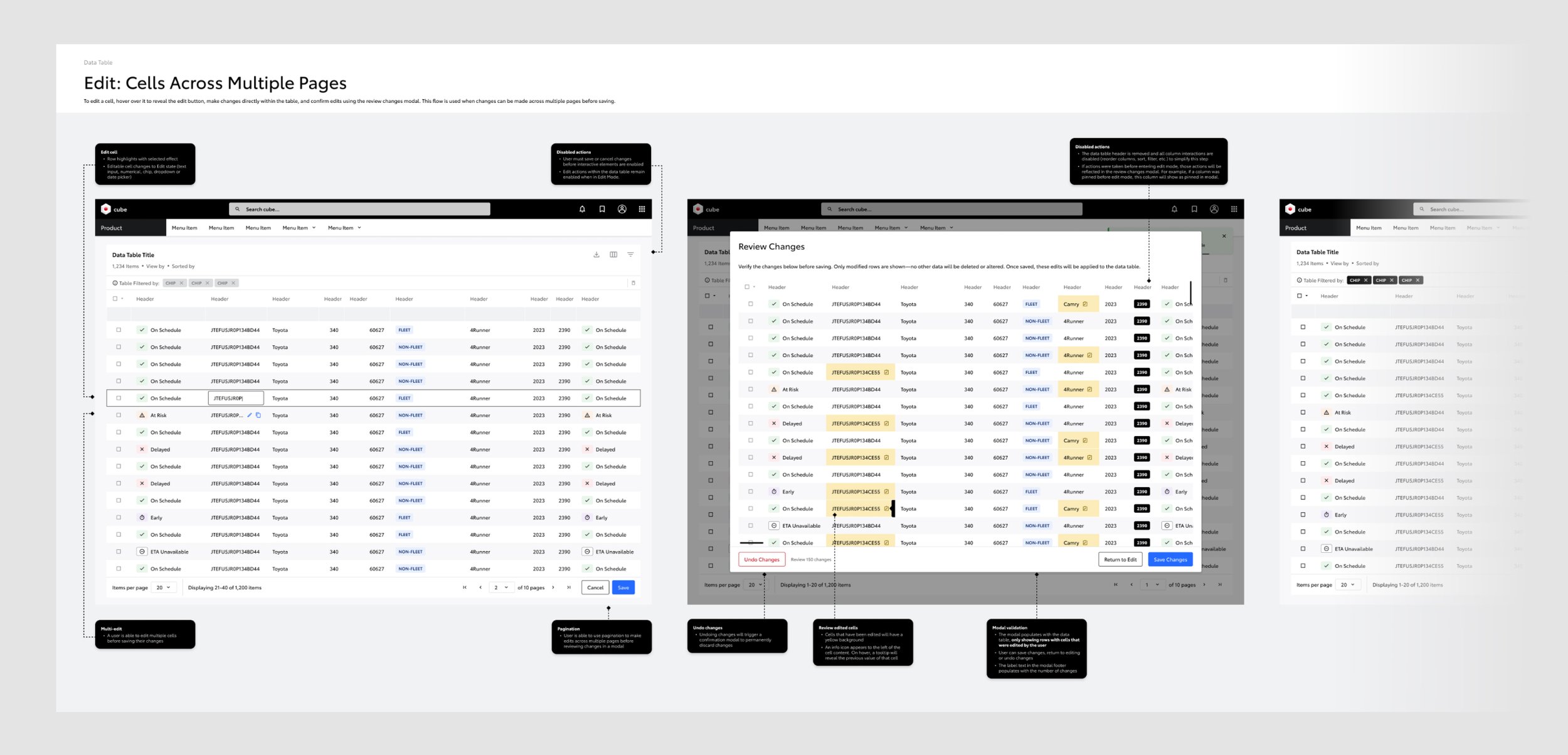
To further support designers, I created the system’s first Template Library, housing reusable flows such as inline editing within data tables and VIN upload workflows. These templates helped reduce duplicated effort and encouraged consistency across products.
Template Library
This work helped re-establish trust and consistency across a growing enterprise design system now adopted by 11 products, with a roadmap to support 27 teams. By improving component quality, alignment, and governance, the system became easier for designers to rely on while supporting faster, more consistent product work.
Through this project, I deepened my experience designing systems at scale by balancing individual team needs with long-term system health and by improving design–dev alignment.
Impact & Learnings
“[Stephanie"] crafted extraordinary UI and partnered with our product designers to ensure that what [she] delivered was solving the problem at hand through great UX design”
— Design Manager / Toyota
“Above all else, [Stephanie] was an excellent designer who was the backbone of the design team’s productivity, and became a go-to resource when anyone had questions about components, process, or design feedback”
— Design Lead / IBM