
University of Pittsburgh GSPIA
Website design for a graduate school with a global focus.
While at Ologie, I collaborated with a senior digital designer to design multiple web pages for the University of Pittsburgh’s Graduate School of Public and International Affairs (GSPIA). The goal was to create a digital experience that felt international, credible, and distinctly aligned with the University of Pittsburgh brand, while making it easy for prospective students to explore programs, events, and key differentiators.

My Role
Digital Designer
Collaborators
Senior Digital Designer, Dev team, Project Manager, Project Lead
Key Sections & Design Contributions
Program Finder
The GSPIA homepage centers around a program finder that allows prospective students to browse majors or degrees based on their interests. I helped design an interactive layout that supports quick scanning and easy exploration, with hover and click states revealing additional details. The page also highlights rankings and testimonials to build trust and credibility early in the user journey.

Events Landing Page

I contributed to the design of an events landing page that surfaces upcoming GSPIA events through a featured hero and carousel. The event card pattern was designed to be reusable and scalable, and was later applied across related pages including news and faculty listings to maintain visual consistency.
Web Style Guide
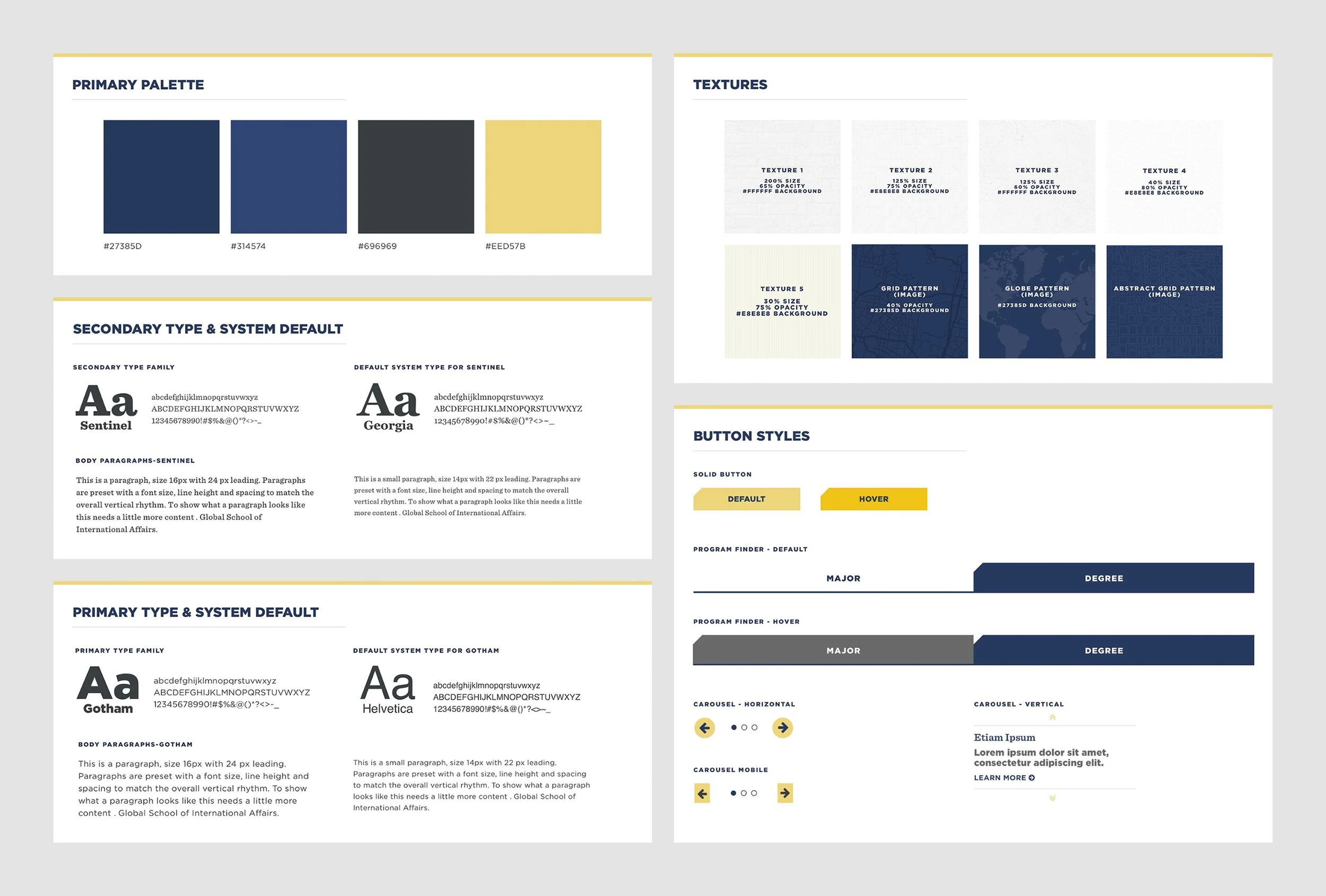
To ensure consistency across the site, we created a web style guide defining colors, typography, textures, and button styles. This system provided a clear foundation for future pages and supported a cohesive visual identity across the GSPIA website.
Impact and Learnings
Designed student-focused web pages that made complex academic offerings easier to explore
Balanced institutional branding with modern, approachable UX for prospective graduate students
Gained experience designing reusable components and patterns for content-heavy websites
Strengthened collaboration skills by working closely with a senior designer and aligning on visual and interaction decisions